





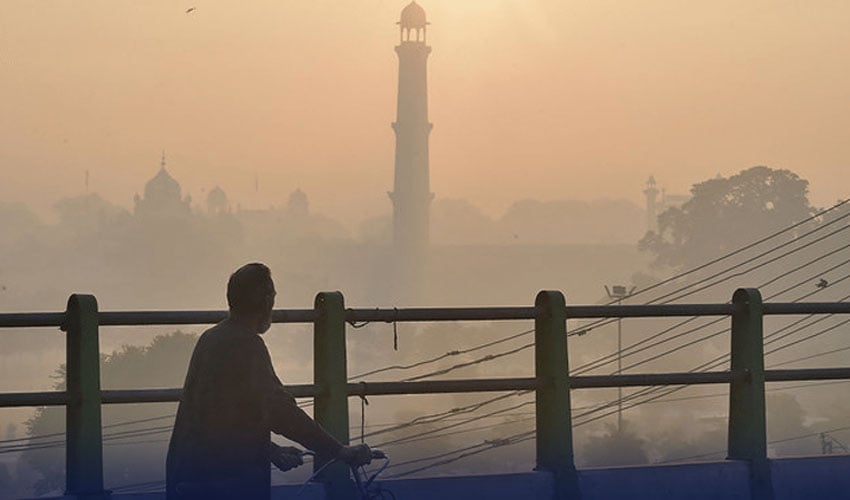
A significant improvement in air quality has been recorded in Lahore and Islamabad, according to data from the Smog Monitoring and Early Warning System.
The system noted that faster wind speeds and favourable wind directions have helped disperse pollutants and reduce smog density in both cities.
In Lahore, wind speeds reached 15 kilometres per hour, while Islamabad recorded winds at 26 kilometres per hour. As a result, Lahore’s Air Quality Index (AQI) dropped to 140, and Islamabad’s was measured at 147 — both below the “dangerous” threshold.
Officials attributed the improvement to changing weather patterns and ongoing government efforts to tackle smog through stricter monitoring and regulation.
Wind direction limited cross-border pollution
Experts reported that the northwest-to-southeast wind direction played a key role in limiting the effects of cross-border pollution, which typically drifts from Indian Punjab due to the burning of crop residues.
“Due to the improved direction and faster wind speed, the reduction in smog is a positive development,” said Senior Minister Marriyum Aurangzeb, who has been overseeing Punjab’s environmental management initiatives.
She added that air pressure and temperature variations have also contributed to the better distribution of air particles, helping reduce smog buildup across major urban centres.
Smog levels significantly lower than last year
Comparative data from the environmental monitoring system revealed a sharp decline in smog levels compared to the same period last year.
On November 4, 2024, Lahore’s AQI was recorded at 455, but this year, it dropped to 290 on the same date. Similarly, on November 5 last year, the AQI stood at 300, while at midnight today, it was measured at 160.
By 8am today, Lahore’s AQI further improved to 117, marking a significant drop from last year’s hazardous readings.
“Thanks to consistent measures by the Punjab government, the intensity of smog in November 2025 has clearly decreased compared to last year,” said Marriyum Aurangzeb.
Punjab govt monitoring, public advisories
The provincial government continues to monitor air quality through its smog control and early warning systems. The senior minister emphasized that technology, research, and collective responsibility are crucial to ensuring cleaner air and sustainable environmental management.
Aurangzeb also urged citizens to take preventive health measures, especially during morning hours when smog concentration tends to rise.
“As per the Health Department’s instructions, citizens should wear masks, avoid unnecessary outdoor activities, and reduce vehicle smoke emissions,” she advised.