
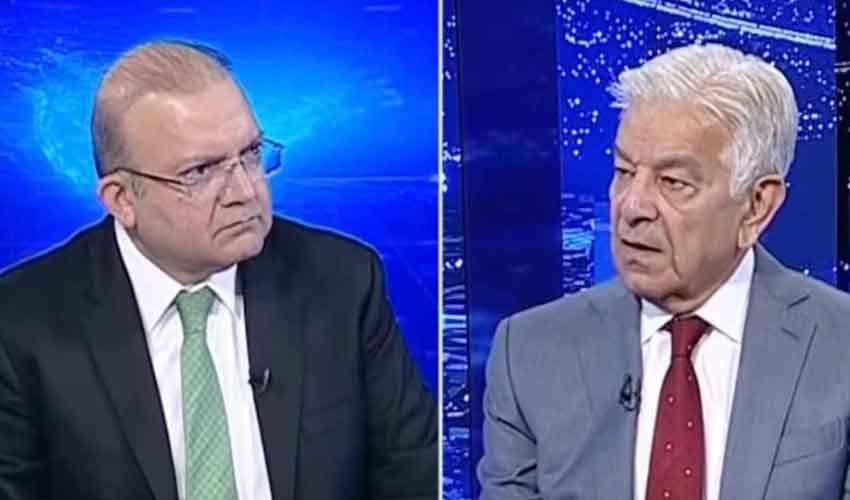
Defence Minister Khawaja Asif has stated that if Pakistan was pressured regarding the Abraham Accords, the country will look after its national interests.
In a fiery interview on 'Nadeem Malik Live' on Samaa TV, the defence minister was asked by the host about the reports that Pakistan would be pressured soon to join the Abraham Accords. To this, Asif replied that they would see when the pressure comes, adding that consultations were underway in this regard.
"We will reply to this only when we are asked to be a part of this accord. If there is pressure on the Abraham Accords, we will see our interests," he stressed. "We will not be part of any US policy that harms Pakistan."
As per Britannica, Abraham Accords are a series of agreements aimed at normalizing diplomatic relations between Israel and several Arab nations. Signed in the latter half of 2020, the accords include a general declaration as well as individual bilateral agreements between Israel and the United Arab Emirates, Bahrain, and Morocco.
Despite this cautious stance, Asif acknowledged that the United States is supporting Pakistan at global economic forums and clarified that Islamabad is an active player in the current geopolitical climate. He also reiterated that it was the government's decision to nominate US President Trump for the Nobel Prize.
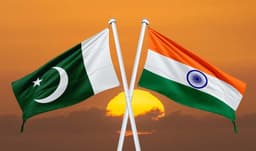
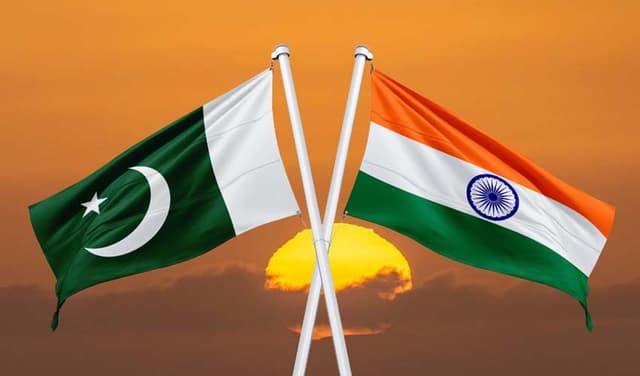
Khawaja Asif further warned that if India attempts to block Pakistan's water, it will be considered an act of war. He also alleged that India is involved in terrorism in Balochistan, claiming Pakistan possesses concrete evidence to support the allegation.
"If India stops Pakistan’s water, it will be considered a war," Asif asserted. "India is involved in terrorism in Balochistan, and we have proof. Several countries have supported our position on terrorism in Pakistan."
He further noted that during the recent Shanghai Cooperation Organization (SCO) meeting, no talks took place between him and Indian Defence Minister Rajnath Singh, despite the Indian side attempting to engage after Asif’s speech. However, permission was not granted for the Indian minister to respond.
Asif reiterated Pakistan’s readiness for dialogue, stating, “We want peace and are ready to talk to India, but the issues of Kashmir and water must be resolved through meaningful dialogue.”
He also hinted at the possibility of another Indian attack, citing regional dynamics and previous escalations.
Highlighting military achievements, the defence minister recalled Pakistan’s successful downing of Indian fighter jets, calling it a “matter of pride”. He also credited China’s unwavering diplomatic support and Pakistan’s own media for playing a responsible and positive role during heightened Indo-Pak tensions. "Wherever we needed it, China supported Pakistan."
“Modi’s arrogance has been buried in the dust,” Asif said, referring to India’s failed attempts to isolate Pakistan diplomatically. He also slated the Indian media for its gimmicks and circus during the Indo-Pak war.
Asif revealed that Pakistan supported Iran during the recent Iran-Israel conflict, adding that India will no longer enjoy the same level of welcome in Tehran due to its changing regional posture. He also stressed that right now, the political and military leadership of Pakistan was united.
Dar rules out possibility of joining Abraham Accords
On Friday, Foreign Minister and Deputy Prime Minister Ishaq Dar had firmly ruled out any possibility of Pakistan joining the Abraham Accords, asserting that such a move would equate to abandoning the country’s longstanding stance in support of a two-state solution to the Palestinian issue and recognizing Israel.
Speaking at a press conference at the Foreign Office, Dar reaffirmed Pakistan’s unwavering support for the establishment of an independent Palestinian state.
His remarks came in response to recent statements by US Special Envoy for the Middle East, Steve Witkoff, who hinted that additional countries — not previously “contemplated” — might soon join the US-brokered accords aimed at normalizing ties with Israel. Witkoff made the comments after attending a White House lunch with Pakistan’s army chief Field Marshal Asim Munir.
“We are not ready to recognise Israel until the two-state solution to the Palestine conflict is accepted,” Dar stressed. “There is no change in our stated policy on the Palestine issue.”
He further added that joining the Abraham Accords would mean forsaking Pakistan’s long-standing demand for a sovereign Palestinian state with Al-Quds Al-Sharif (Jerusalem) as its capital, based on pre-1967 borders. “Let it be clear to everyone that our seven-decades-long policy remains unchanged,” Dar concluded.
.jpg&w=640&q=75 "PML-N wins 9, PPP secures 4 seats in first phase of AJK elections")
.jpg&w=256&q=75 "PML-N wins 9, PPP secures 4 seats in first phase of AJK elections")